

The New Canvas
For decades, a prevailing cultural myth has dismissed video games as a form of passive entertainment. A mindless digital distraction that pulls audiences away from “valid” reading. But as critic Angela Faustino has pointed out, this perspective is rapidly becoming obsolete. Video games possess the narrative weight, emotional resonance, and complex world-building of classic novels. They explore grief, triumph, and morality. Yet, to truly understand video games as literature, we must stop judging them by the rules of traditional books and start looking at the unique ways they ask us to engage with their worlds.
Enter Ergodic Literature
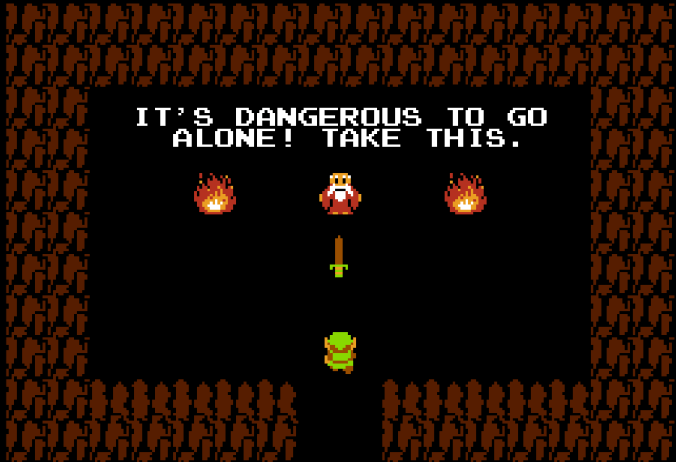
This brings us to a critical academic concept coined by scholar Espen J. Aarseth in his 1997 book Cybertext: the idea of “ergodic literature.” Aarseth argues that in traditional reading, the effort is purely trivial; your eyes simply move across the page. But in ergodic literature, “nontrivial effort is required to allow the reader to traverse the text.” You cannot just sit back and let the story wash over you. If you do not actively interact, the story literally cannot progress. Video games are the ultimate modern realization of ergodic literature, transforming the audience from a spectator into an essential cog in the storytelling machine.
The Digital Symposium
Crucially, this “nontrivial effort” does not end when the screen goes dark. Because the texts within these games are so deliberately fragmented, players are forced to fully embrace the role of literary archaeologists. But an archaeologist does not simply dig up a broken artifact and hide it away; they present their discoveries to the broader academic community. Similarly, gamers take their excavated knowledge across the web, convening in digital symposiums on platforms like Reddit or YouTube. In these spaces, they present their evidence, a cryptic weapon description here, a ruined environmental detail there, and engage in rigorous, collaborative debate. Just as scholars at an archaeological convention might argue over the historical timeline of a newly discovered ruin, these players cross-reference data, challenge conflicting interpretations, and work together to harmonize a cohesive narrative from the rubble.
The Science of Digital Literacy
This “nontrivial effort” isn’t just a fun theory; it is backed by empirical educational research. Scholars like von Gillern and Nash (2024) have mapped the academic landscape to prove that games actively facilitate deep literacy skills. When players engage with these digital texts, they aren’t just memorizing button combos; they are processing complex vocabulary, synthesizing visual data, and making critical decisions based on layered information. Playing a game is a highly complex cognitive task that builds modern reading comprehension skills in ways traditional media cannot.

 Trapp - ENG 489 Scholarly Products Final Project